Naja A. Mack, Ph.D.
Initiatives & Outreach
Organizer & Logistics Lead · November 22, 2025

HBCU Brain Drone Race

An interdisciplinary educational and technology event in which racers fly drones using brain-computer interfaces, steering with their brainwaves instead of a controller.

Brain Drone Race logo: Powered by the HAX Lab

Overview

On November 22, 2025, the HAX Lab hosted the inaugural HBCU Brain Drone Race at Morgan State University, in the University Student Center Ballroom. Racers wore brain-computer interface headsets and flew drones using only their brainwaves, while more than 200 people watched. The event was free and open to the public, with raffles, giveaways, and a live DJ.

I organized the event and served as its logistics lead. The race brings students into direct contact with neurotechnology, human-computer interaction, and emerging computing technologies through competition and collaborative learning.

More than 60 Morgan State students registered to participate, and 37 took part in the qualifiers. The eight fastest advanced as finalists to race for the title, with eight alternates ready to step in.

60+Morgan State students registered to participate
37took part in the qualifiers
8finalists, with 8 alternates
200+attendees

Results

Inaugural champion Fikewa Akindolire Sophomore, Information Systems
2ndObaloluwa Wojuade · Junior, Computer Science
3rdKylil Omar · Sophomore, Accounting
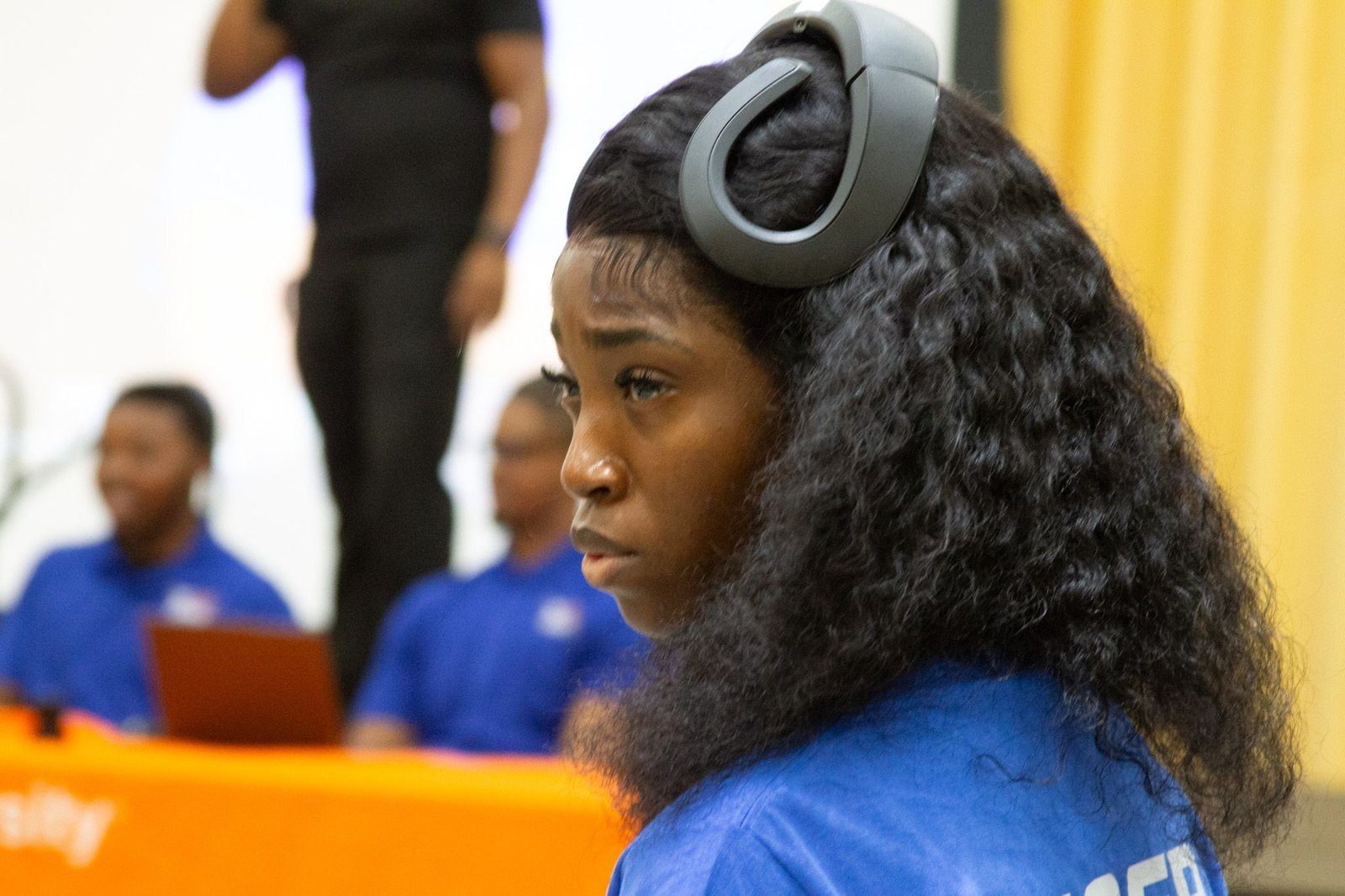
Fikewa Akindolire in a blue race shirt, focused and wearing a Neurosity Crown EEG headset during the race

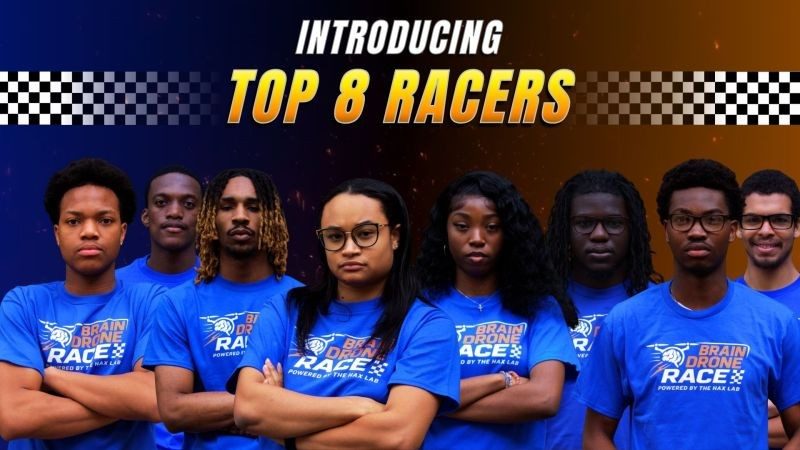
Top 8 finalists

  • Debra Hammond · Freshman, Entrepreneurship
  • Fikewa Akindolire · Sophomore, Information Systems
  • Kelvin Dagadu · Senior, Civil Engineering
  • Obaloluwa Wojuade · Junior, Computer Science
  • Michael Guy · Doctoral student, Integrated Materials Science
  • Christian Olabisi · Senior, Electrical Engineering
  • Tyreke Bowman · Junior, Cloud Computing
  • Kylil Omar · Sophomore, Accounting
Promotional graphic reading Introducing Top 8 Racers, showing eight students in blue Brain Drone Race shirts standing with arms crossed
The top 8 racers.

Technology

How the race works

Brain-computer interfaces and drones

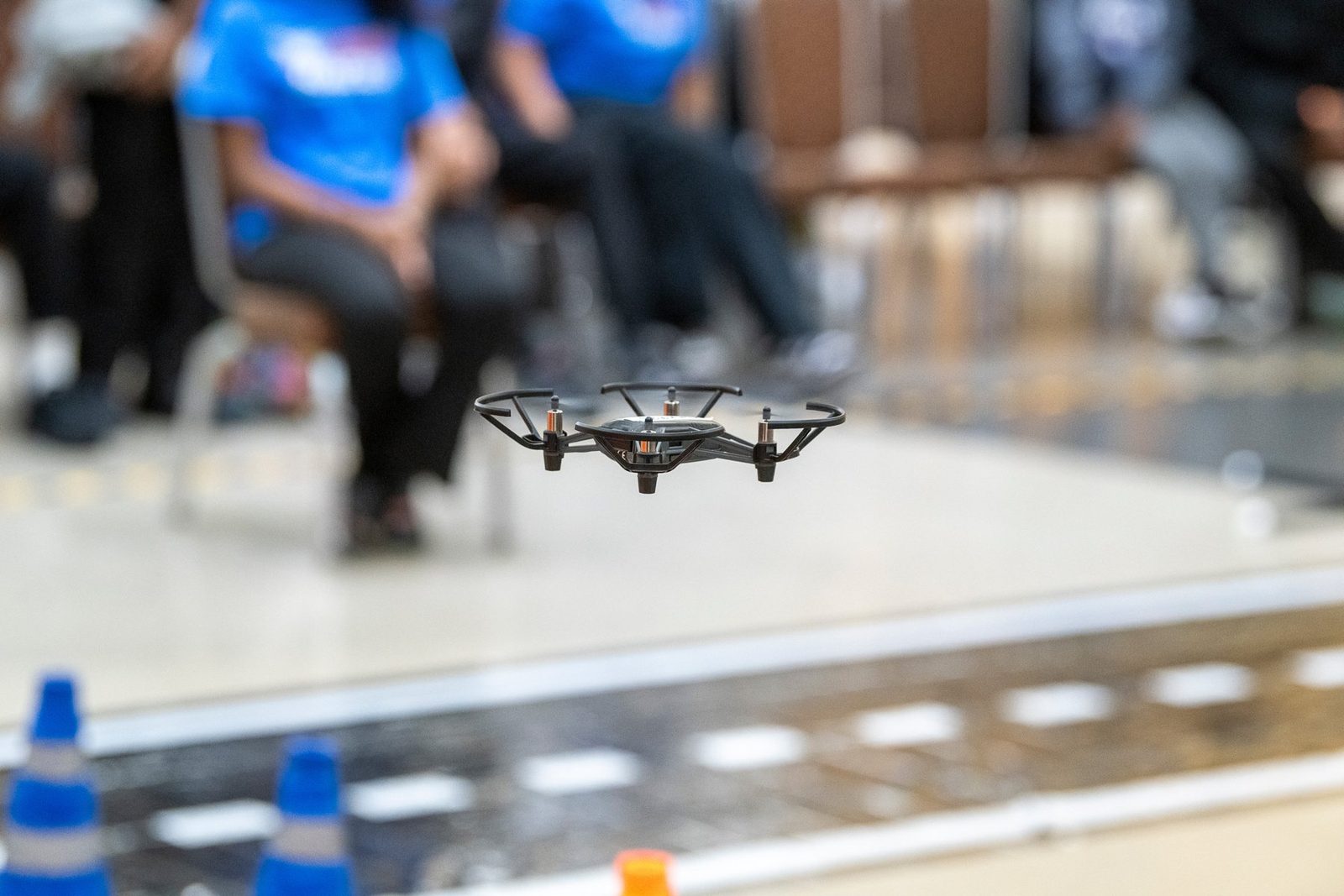
Racers wear Neurosity Crown EEG headsets, which read brain activity and translate it into flight commands, steering drones along a course marked with cones without using their hands.

  • Drones: DJI Tello quadcopters.
  • Qualifiers: each racer calibrated the headset, could take a practice session, and then flew a timed two-lap run: an open first lap, then a second lap around an obstacle. The fastest combined times earned the eight finalist spots.
  • Race day: operators launched and positioned the drones, then started each heat at the same moment so every race began fairly.
Event experience

A small quadcopter drone hovering above a race course marked with cones, with seated spectators blurred in the background
A drone in flight, steered by brainwaves alone.
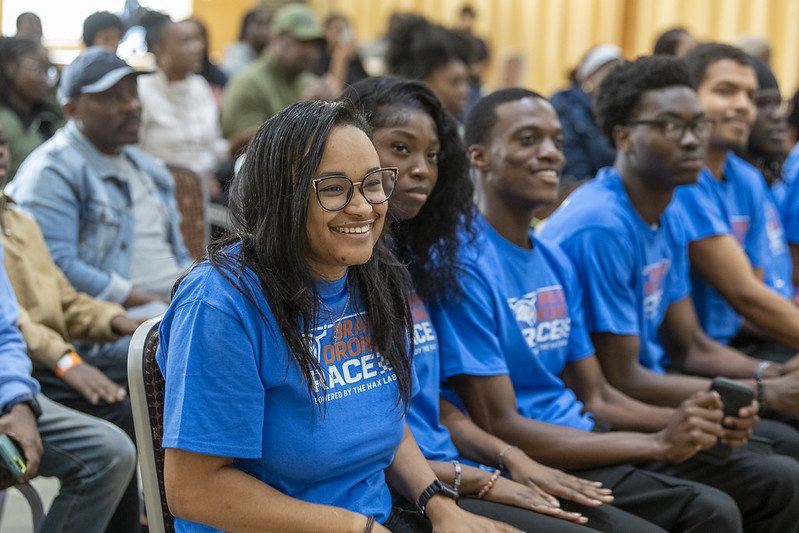
A smiling row of seated racers in blue Brain Drone Racers shirts, with the audience behind them
Racers watch from the front row.
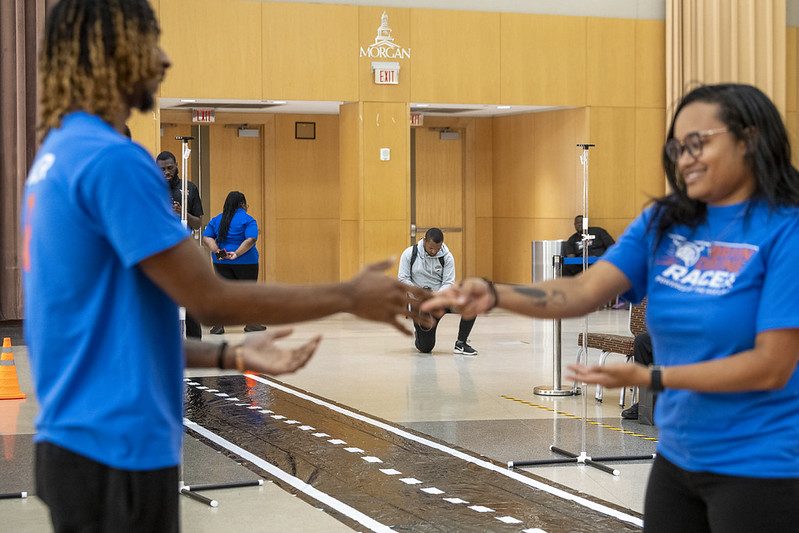
Two racers in blue Brain Drone Racer shirts reaching across the race lane to shake hands
Sportsmanship between racers.
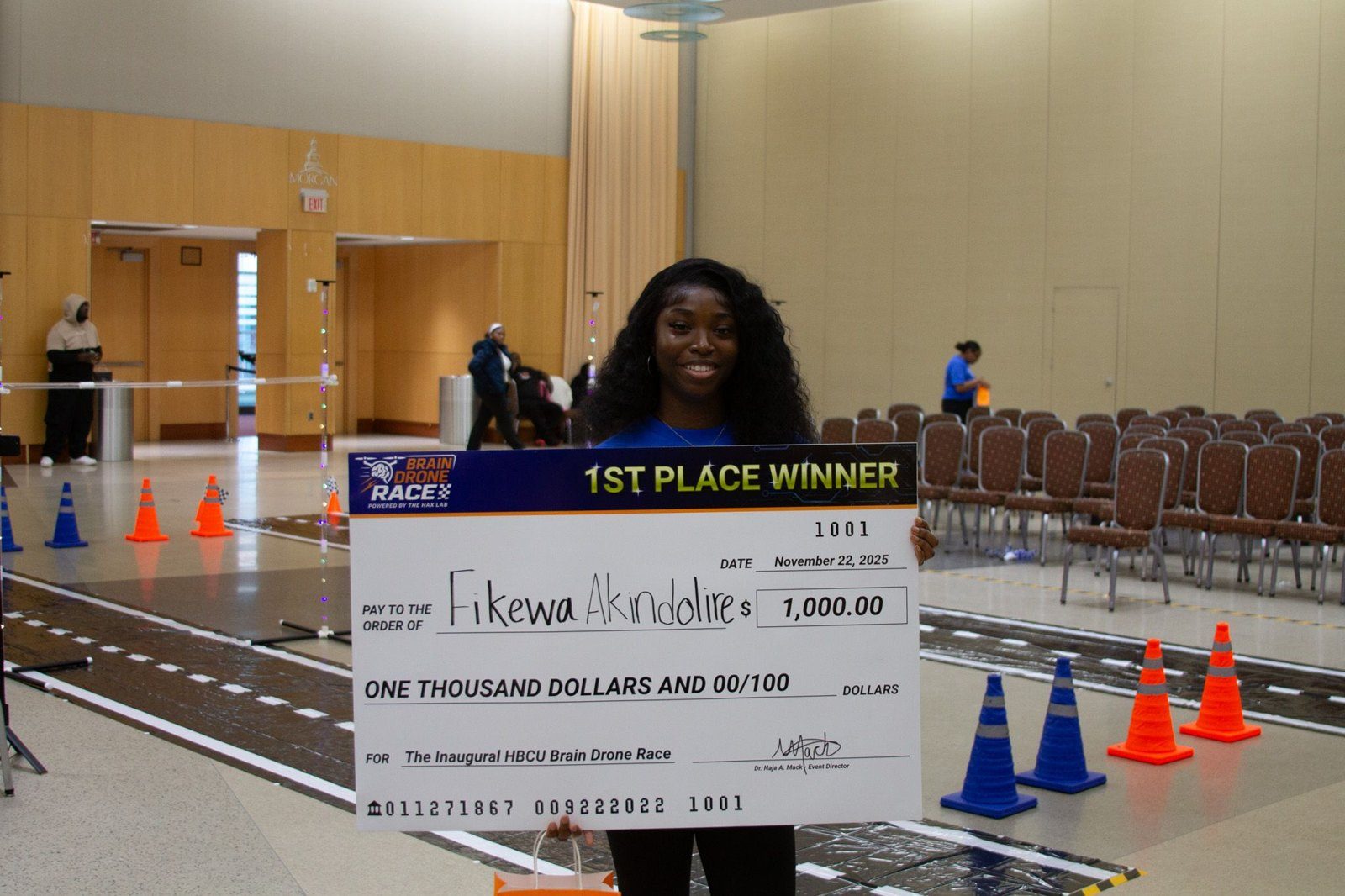
Fikewa Akindolire smiling and holding an oversized 1st Place Winner check from the Brain Drone Race, with the race course and cones behind her
Champion Fikewa Akindolire with her 1st place prize.

Photos: Morgan State University · See all 18 photos on Flickr · Event page · Event website

In the media

Research connections & broader impacts

The race connects to my research on immersive and emerging interfaces: brain-computer interaction, human-drone interaction, usability and accessibility, experiential learning, and emerging technology education. A paper on the race is in preparation.

It also creates opportunities for HBCU students to engage with emerging technology fields, collaborate across disciplines, and see themselves in neurotechnology and AI. A team of 14 HAX Lab researchers and volunteers ran every component of the race, from developing the system to running the qualifiers and race-day operations.

Related research
Immersive Interfaces

Mind Mastery

An inclusive game played with a brain-computer interface instead of a hand-held controller. Because controllers can exclude players with limited mobility, it explores how neurotechnology can open gameplay.

In development · Published at AHFE 2025