Naja A. Mack, Ph.D.
Research overview

Research

My research investigates how people interact with intelligent and emerging technologies and how these systems can be designed to better respond to human needs. Through participatory design, prototyping, and user-centered evaluation, I develop and study technologies that support personalized learning, meaningful interaction, and inclusive experiences.

This work sits at the intersection of human-computer interaction and human-centered AI, and much of it is conducted with undergraduate and graduate researchers in the HAX Lab.

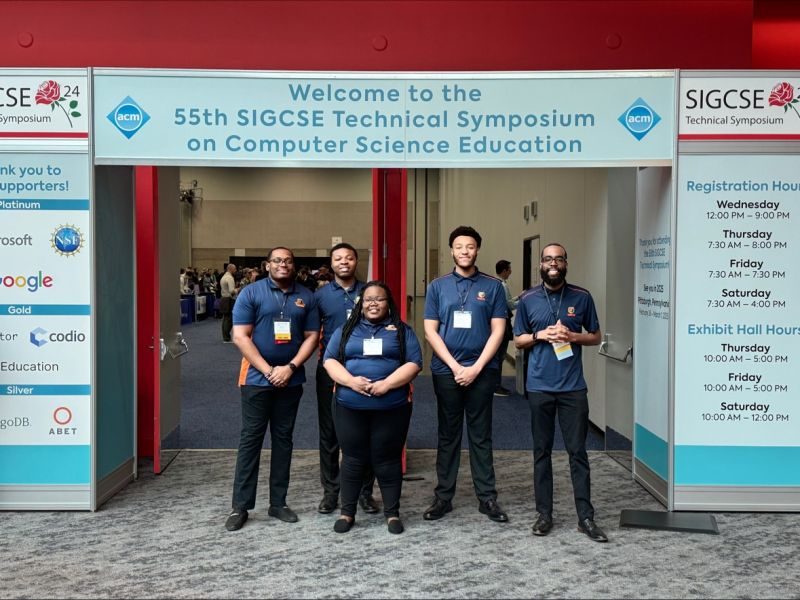
Five HAX Lab members in matching navy polos standing under the welcome banner of the 55th SIGCSE Technical Symposium on Computer Science Education
HAX Lab student co-authors at ACM SIGCSE 2024.

Research areas

01

Human-Centered & Conversational AI

How intelligent systems can understand, support, and respond to the people who use them, from conversational agents to adaptive learning tools.

Focus
  • Human-AI interaction
  • Conversational agents
  • Intelligent tutoring systems
  • Adaptive and personalized learning
  • Learner modeling
  • Explainability, transparency, and human agency
02

Immersive & Emerging Interfaces

How virtual reality, games, and brain-computer interfaces can create new ways to learn, heal, and play.

Focus
  • Virtual reality
  • Augmented reality
  • Brain-computer interfaces
  • Neuroadaptive interaction
  • Serious games and interactive simulations
  • Immersive experiences for learning and health
03

Computing Education & Broadening Participation

How to make computing education more engaging, accessible, and culturally relevant, so more learners see themselves as creators of technology.

Focus
  • Game-based learning
  • Computer science education
  • AI literacy
  • Culturally relevant learning
  • Inclusive educational technology
  • K–12 computing education
  • Broadening participation in computing

Selected projects

A selection of projects behind this research. Filter by topic.

Showing 9 projects
Human-Centered AI

ICon History

A conversational AI tutor that lets learners talk with historical figures. Version 1.0 was co-designed with children; 2.0 adds underrepresented figures, AI conversations, rooms, and mini-games.

In development · Published at IDC 2019
Immersive Interfaces

Collision Course

An immersive virtual reality football experience for concussion education. Players take the field in first-person gameplay, encounter simulated concussion symptoms, and get feedback on their decisions.

In development · Paper in preparation
Human-Centered AI

MathWiz

A conversational AI tutor for culturally relevant, personalized math learning. MathWiz uses learner modeling and adaptive feedback to respond to each learner and connect math to their lives. It was co-designed with learners.

In development · Published at CHI 2025
Immersive Interfaces

Mind Mastery

An inclusive game played with a brain-computer interface instead of a hand-held controller. Because controllers can exclude players with limited mobility, it explores how neurotechnology can open gameplay.

In development · Published at AHFE 2025
Immersive Interfaces

Motion Matrix

An ASL-to-English app that turns hand signs into text or speech for non-vocal and non-signing communities. It combines surface EMG data, machine learning, and conversational AI to connect people.

In development · Paper in preparation
Human-Centered AI

Encore

An AI-powered instructional analytics platform for teachers. Teachers upload classroom videos, transcribe dialogue, and label speakers; Encore generates analytics on questioning, instructional quality, and classroom interaction.

In development · Paper in preparation
Human-Centered AI

SAGE

Screening, Assessment, Guidance, and Engagement: an LLM-guided app that walks users through substance use screening in plain language and helps clinicians review results and document follow-up.

In development · Prototype
Initiative · Computing Education

CodeBears

An AI, computing, and robotics outreach program giving K–12 learners hands-on computer science experiences. Morgan State students teach its camps, and its STEM days have reached 2,100+ students.

Published · SIGCSE and BICE 2024
Initiative · Immersive Interfaces

HBCU Brain Drone Race

The inaugural HBCU Brain Drone Race, where students flew drones with their brainwaves. Eight finalists raced on November 22, 2025, for 200+ spectators. A team of 14 HAX Lab researchers and volunteers ran it.

Paper in preparation
Research approach

My research studies both the technology and the human experience around its use: what people need, how they interact with a system, and what changes as a result.

Methods that inform my work

  • Human-centered designStarting from the needs, values, and contexts of the people a technology is meant to serve.
  • Participatory design and co-designDesigning with learners, students, and communities rather than for them.
  • Prototyping and iterative developmentBuilding working systems and refining them through repeated cycles of feedback.
  • Usability testingObserving people using a system to find what works and what gets in the way.
  • User experience evaluationStudying how people perceive and feel about an experience, not only whether it functions.
  • Empirical studies and learning assessmentsMeasuring how technologies affect learning, engagement, and behavior.
  • Interdisciplinary collaborationWorking across computing, education, health, and the social sciences.

Research impact

27publications
6peer-reviewed papers with student co-authors since 2023
58student researchers trained
  • Advancing human-centered AI and interactive computingResearch published at venues including ACM CHI, ACM SIGCSE, ACM IDC, IEEE VR, and HCI International.
  • Supporting personalized and accessible learningConversational tutors and adaptive learning tools such as ICon History and MathWiz.
  • Developing interactive experiences for health educationImmersive experiences such as Collision Course for concussion education.
  • Broadening participation in computingPrograms such as CodeBears and the HBCU Brain Drone Race that bring K–12 and HBCU students into computing.
  • Mentoring undergraduate and graduate researchers58 student researchers trained in the HAX Lab, many of them co-authors on published work.
  • Contributing to the research community27 publications, invited talks, and service on program committees and review panels.
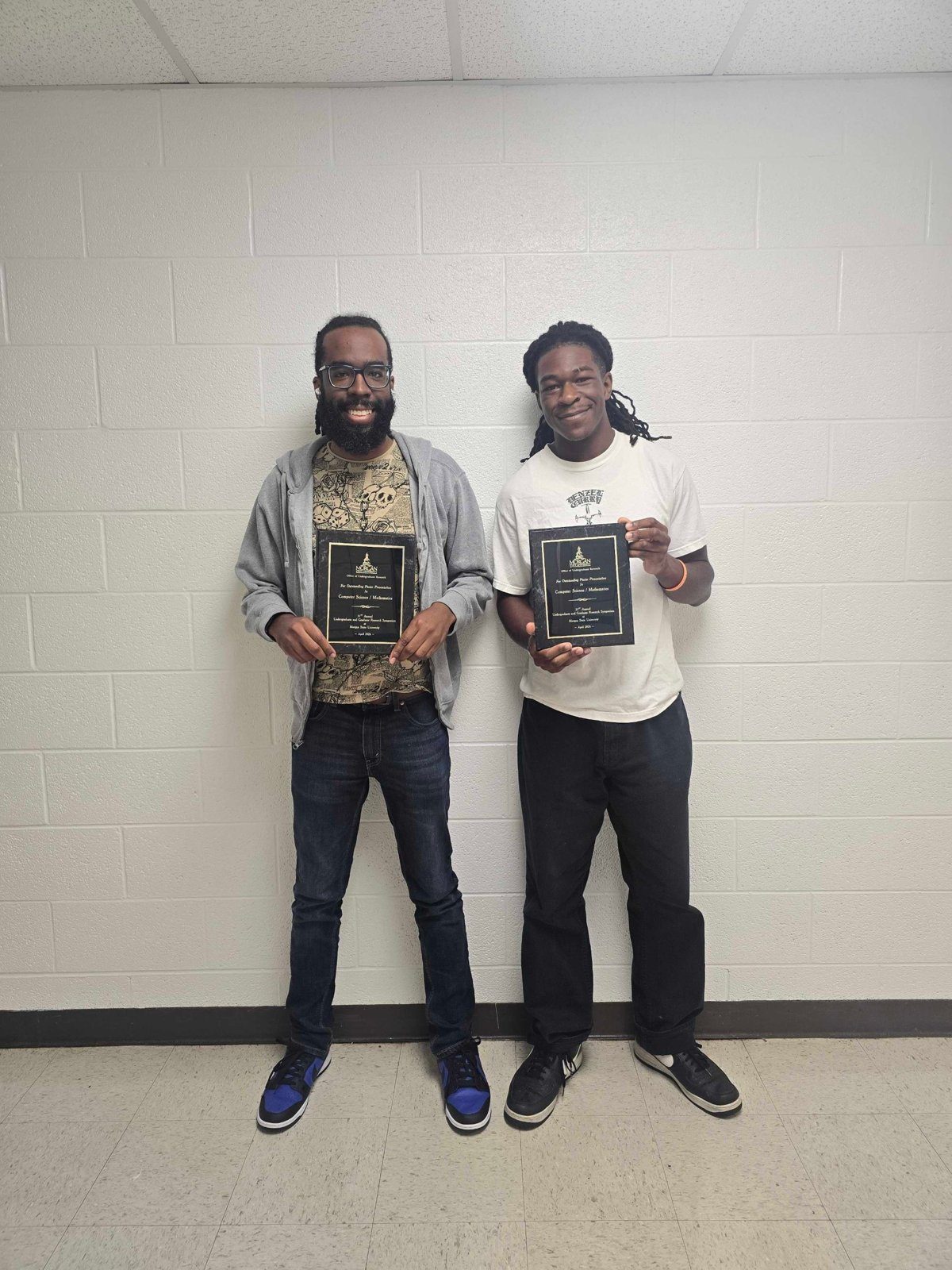
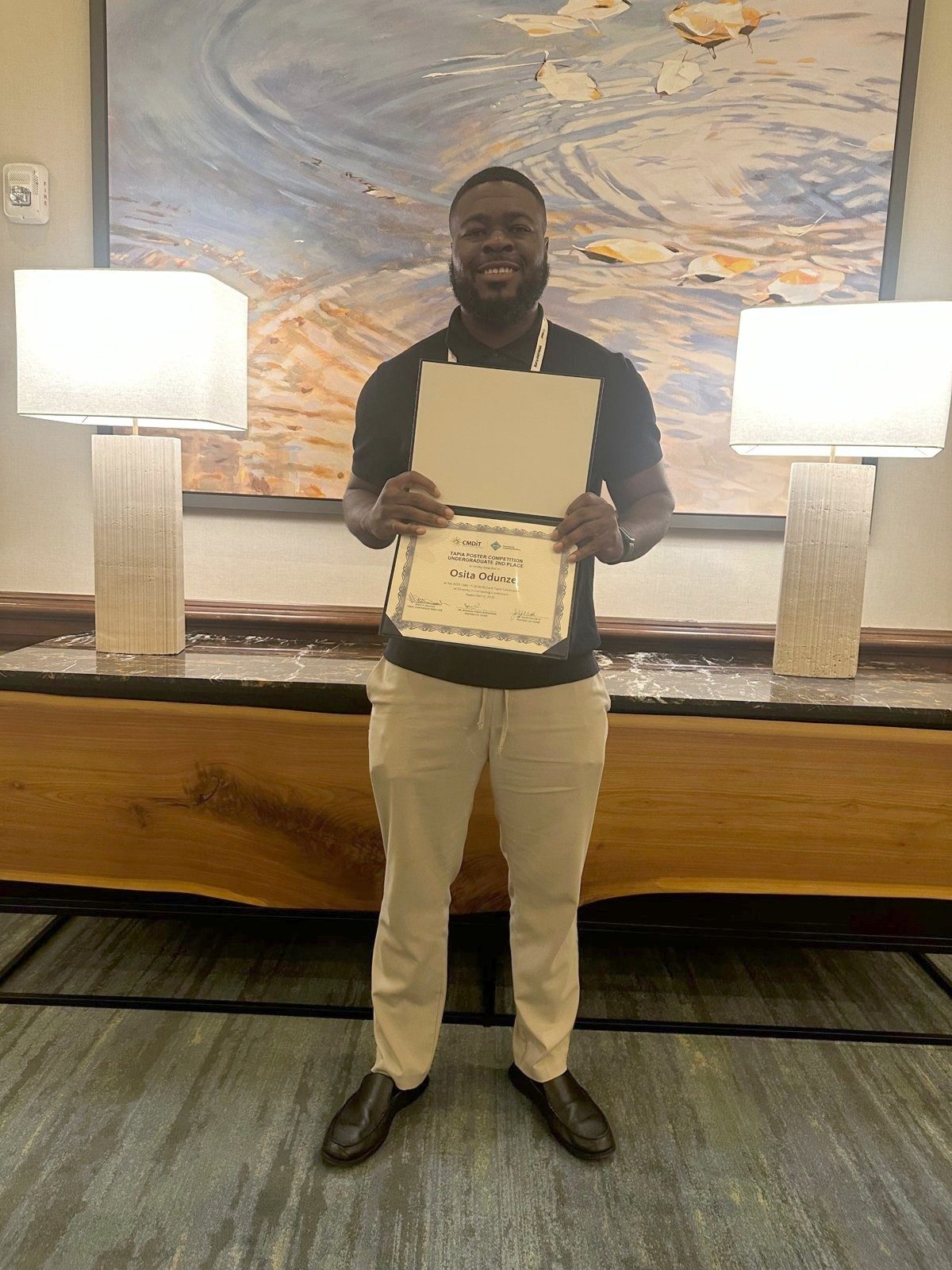
Elijah Ballou and Zori Greene standing against a white wall, each holding a plaque for Outstanding Poster Presentation Osita Odunze smiling and holding his Tapia Poster Competition Undergraduate 2nd Place certificate
Student researchers recognized for their posters: Elijah Ballou and Zori Greene (2026) and Osita Odunze at Tapia (2025).